Posts

Greed and politics

Image
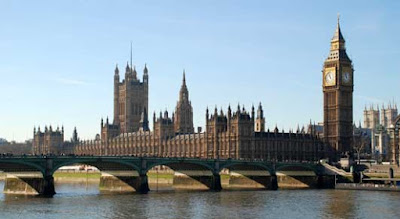
We already knew that bankers had been greedy and sometimes thieves. Well, we now learn through the expenses scandal uncovered by The Telegraph, that politicians have been as much greedy. Indeed, British members of parliaments have used expenses claims to make up huge salaries at the expense of the taxpayers. The difference between bankers and MPs is that bankers could blame an inadequate and inefficient regulation whereas MPs can't pass on the blame to anybody because they make up the rules that they live with. Shoking! An example of cover-up in video

Total outrage

Image
Total has sacked several hundreds of employees (up to 900 according to some reports) for participating in a strike. This is outrageous behaviour on behalf of an international company. Let's boycott them! Link to the BBC news story

Apple - Great Products But Is It a Great Investment?

25 Billions dollars in cash and no dividend, why? http://www.istockanalyst.com/article/viewarticle/articleid/

Exploding debt threatens America - Top Stories - FT.com

http://m.ft.com/cms/s/0/71520770-4a2c-11de-8e7e-00144feabdc0.html?catid=2&SID=bf897f14bae9c5102c8ac3f2bf14958f Cyrille http://cyrilleuk.blogspot.com Sent from my iPhone

The financial crisis makes a European Army more likely

Image
The financial crisis is likely to have lasting impact on defence budget and strategies in countries like the UK. Not only the current budget deficits mean that some countries have to reduce their defence spending immediately, but this reduction may be sustained for a long period because as countries de-leverage, GDP growth is likely to stabilize at a lower level than before the crisis. This will require to rethink defence spending and strategy within the European Union. National armies in the EU can be divided into several groups: - UK and France, the two main forces, have nuclear deterrant and ability to deploy troops overseas. - Italy, Germany and Spain have limited armies, only able to operate within an international coalition structure - Smaller countries rely on International coalitions like NATO to defend themselves The inevitable reduction in defence spending should be seen as an opportunity to reorganise EU defence in a more efficient way via specialisation: - Joint UK/France n...

Stress Test Results

US officials have made public the result of the stress test of banks . We provide here a summary of the main points: Scope Major Bank Holding Companies (BHC) - 19 in total. Those BHCs hold two thirds of assets and half of loans in the US banking system. Objective In an "adverse scenario", each BHC should have by 2010 a tier 1 capital ratio in excess of 6% and tier 1 common capital ratio in excess of 4%. Banks who don't satisfy both ratios will need to raise more capital to reach it. Results BHC have since the beginning of the financial crisis in 2007 lost $350 billion up to 31 Dec 2008. The stress test shows that further losses of $600 billion ($450 billion from loans and $135 billion from trading and securities) may occur within two years in the "adverse scenario", making the total losses reach $950 billion. In order to absorb such losses and keep the tier 1 ratios above the objective limit, BHCs will need to increase their tier 1 capital by $185 billion. More ...

Shadow banking system and macro-economic regulation

The World, and the US in particular, are facing a serious risk of deflation as individuals and corporations reduce their excessive debt/leverage all at the same time. Ben Bernanke, the Chairman of the Federal Reserve, explains why in this case, the central banks have to work with the treasuries to fight this risk. We also look at why the successive rate hikes have failed to curb the bubbling demand for credit: the answer is called shadow banking system. Ben Bernanke, May 2003, about the different roles of a central bank in inflationary and deflationary times, taking the example of Japan: "The Bank of Japan became fully independent only in 1998, and it has guarded its independence carefully, as is appropriate. Economically, however, it is important to recognize that the role of an independent central bank is different in inflationary and deflationary environments. In the face of inflation, which is often associated with excessive monetization of government debt, the virtue of an in...